For international students
Understand the U.S. admissions process, what to prepare, and how to plan your next steps from abroad.
Your academic context
A clear application plan
Your family, involved
A new admissions landscape
A different system. A clearer starting point.
Select a topic to explore the landscape.
Academic-context differences
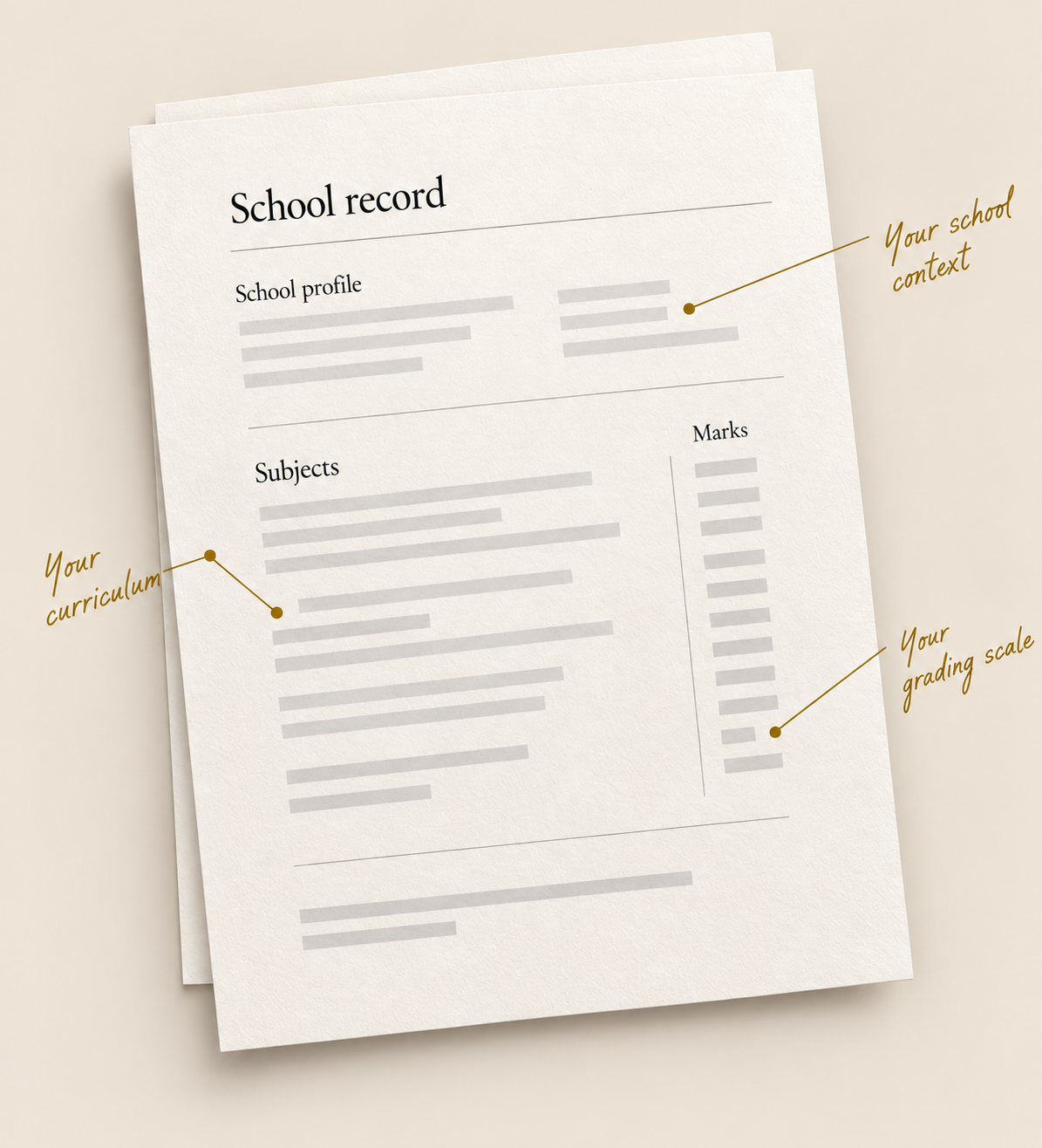
Different grading scales and curricula tell different stories. The aim is to make yours clear.
Marks, percentages, and grading scales need the context of your school’s system.
Your subjects and course choices help explain what you studied and the opportunities available to you.
Strong performance in your own system can be understood without forcing it into a simple GPA comparison.
Transcript formats, translations, and any required evaluations vary. Verify what each university expects, school by school.
Documents & testing checks
Build your checklist from each university’s own admissions page, for your application year.
Confirm accepted records, submission methods, and whether an official or certified translation is needed.
Confirm which forms your school submits, how they are sent, and whether a school profile should explain your curriculum and grading.
Check whether a test is required, which tests are accepted, any minimum scores, and whether a waiver may apply.
Confirm whether SAT or ACT scores are required, optional, or not considered, and how official scores should be sent.
Requirements vary. Start with each university’s official admissions page.
If required, certified translations and credential evaluations must be arranged separately. Professor’s Desk does not provide these services.
Planning from abroad
Your school year may follow a different rhythm. Planning around each U.S. university’s deadlines helps make room for it.
Application deadlines may overlap with local exams or school breaks. Identify those pressure points early.
Allow time for recommendations and transcripts to be prepared and submitted by your overseas school.
Use each university’s deadline to plan school requests, preparation, and your own review time.
Make space for busy school periods and the time others need, so fewer tasks arrive at once.
Parent coordination
Online guidance for families worldwide, with room for your time zone and your student’s independence.
Coordinate meeting times around your family’s time zone and availability.
Parents stay informed about plans and progress while the student does the application work.
Meetings and guidance are delivered online, so distance does not require travel.
A shared understanding of timing, communication, and roles helps everyone stay connected.
Let’s Build your strategy
Tell Cristina about your student’s goals and where you are in the admissions process.
Personal U.S. college admissions guidance for international students and families, led by Cristina Arias.
Admissions Consulting
Essay Coaching
International Students
About Cristina
Resources
Contact
Book a Strategy Call
Consultations are held online, worldwide.
© 2026 Professor’s Desk. All rights reserved.
Privacy Policy Terms